
Children are a blessing from the Lord, bringing love, joy, hope, and a meaningful sense of purpose into family life. Their presence can fill a home with precious memories, growth, and gratitude. This biblical idea reminds parents and families to value children as wonderful gifts from God.
Every child has a unique place in the family and can bring moments that shape the heart in beautiful ways. Understanding why children are described as a blessing can deepen appreciation for the gift of family.
In this article, you will learn about the biblical meaning of children as a blessing from the Lord. You will also discover relevant Scripture, spiritual meaning, and ways to appreciate the blessing of children.
What Does It Mean That Children Are a Blessing From the Lord?
Children can bring love, happiness, and a deeper sense of purpose into family life. Seeing them as a blessing encourages parents to appreciate their presence and nurture them with patience, care, and gratitude.
- May every child grow surrounded by genuine love, patience, and understanding.
- Each young life can bring a special kind of joy that makes ordinary family moments meaningful.
- A child’s laughter may fill a home with warmth and create memories that remain precious for years.
- Parents can discover new strength as they guide their children through different stages of life.
- Every milestone offers an opportunity to celebrate growth, learning, and God’s goodness.
- Family life can become richer when children are welcomed with compassion and thoughtful care.
- Their unique personalities remind parents that every person has individual gifts and possibilities.
- Through everyday experiences, children can teach adults patience, humility, kindness, and wonder.
- A loving home gives children a foundation where they can feel valued and encouraged.
- Parents may find renewed gratitude when they recognize the small blessings found in daily family life.
- Childhood brings countless opportunities to build strong relationships through shared experiences.
- Faith can become more meaningful when families encourage children to understand love, kindness, and gratitude.
- Every child deserves guidance that helps them develop confidence while learning responsibility.
- Meaningful family traditions can strengthen bonds and remind everyone of the blessing of togetherness.
- Gratitude for children can inspire parents to cherish each season of their growth with love and appreciation.
Biblical Verses About Children as a Gift From God
Scripture contains several passages that describe children in connection with God’s goodness and family blessings. These verses can provide spiritual encouragement and help families reflect on the value of raising children with love and faith.
- Psalm 127:3 describes children as a heritage from the Lord and presents them as a valuable gift.
- Families can reflect on this passage as a reminder to appreciate the responsibility of parenthood.
- Psalm 128 also connects family life with blessing and speaks warmly about children within the home.
- Jesus welcomed children and showed that they hold an important place in God’s kingdom.
- Mark 10:14 records Christ encouraging others not to prevent children from coming to Him.
- Matthew 19:14 presents a similar message about welcoming children with care and acceptance.
- Proverbs 22:6 encourages parents to guide children in a way that supports their spiritual development.
- Ephesians 6:4 reminds parents to raise children with thoughtful instruction rather than harsh treatment.
- Deuteronomy 6:6–7 emphasizes the importance of teaching God’s words within everyday family life.
- These passages show that Scripture places meaningful responsibility on parents to nurture and guide children.
- Biblical teachings can encourage families to build homes centered on love, wisdom, faith, and compassion.
- Reading Scripture together can create opportunities for children to ask questions and explore their faith.
- Prayer can help parents express gratitude for their children while seeking wisdom for their responsibilities.
- Biblical examples also encourage adults to treat children with dignity, patience, and genuine care.
- Reflecting on these verses can help families recognize children as precious lives deserving love, guidance, and protection.
Why Children Bring Joy and Purpose to Families
Children often bring new experiences, meaningful relationships, and memorable moments into a family. Their growth and development can also inspire parents to discover greater patience, responsibility, and purpose in everyday life.
- A child’s excitement over simple discoveries can make familiar moments feel fresh and meaningful.
- Family celebrations often become more joyful when children share their enthusiasm and curiosity.
- Their questions can encourage parents to look at everyday experiences from a different perspective.
- Watching a child learn a new skill can create a powerful sense of pride and gratitude.
- Shared meals, conversations, and activities can strengthen emotional connections between family members.
- Childhood milestones provide opportunities for families to celebrate progress together.
- Parents may develop greater patience as they respond to the changing needs of their children.
- Siblings can learn cooperation, empathy, communication, and responsibility through their relationships with one another.
- Difficult moments can also teach families valuable lessons about forgiveness, resilience, and understanding.
- A child’s dreams may inspire parents to offer encouragement while helping them explore their abilities.
- Family routines can become meaningful traditions when everyone contributes time and attention to one another.
- Moments of laughter can relieve tension and create a warmer atmosphere within the home.
- Children can encourage adults to slow down and appreciate experiences that might otherwise be overlooked.
- Their presence may motivate parents to build a home environment rooted in security, kindness, and encouragement.
- Above all, family life can gain deeper meaning when children are loved, supported, and guided with care.
The Spiritual Meaning of Raising Children
Raising children can be viewed as an important responsibility that involves guidance, compassion, discipline, and faith. Parents have opportunities to model positive values while helping their children develop character and a strong spiritual foundation.
- Raising a child involves more than meeting physical needs because emotional and spiritual guidance also matter.
- Parents can demonstrate faith through the way they respond to challenges, relationships, and everyday responsibilities.
- Gentle guidance helps children understand the difference between healthy choices and harmful behavior.
- Consistent examples often teach values more effectively than words alone.
- Prayer can become a meaningful part of family life and provide moments of reflection and gratitude.
- Children can learn compassion when adults show kindness toward neighbors, relatives, and people in need.
- Honest conversations allow young people to explore questions about faith without fear or embarrassment.
- Parents may strengthen their children’s character by teaching honesty, responsibility, forgiveness, and respect.
- Family worship or Scripture reading can create peaceful opportunities for spiritual connection.
- Difficult experiences can become lessons in perseverance when children receive supportive and thoughtful guidance.
- Respectful discipline can help children understand boundaries while preserving trust within the family.
- A spiritually supportive home can encourage children to develop their own understanding of faith as they mature.
- Parents can celebrate acts of kindness to show that spiritual values are meant to influence everyday behavior.
- Each stage of childhood offers new opportunities for families to grow together in wisdom and understanding.
- Faithful parenting ultimately involves guiding children with love while recognizing that each child has a unique journey.
How Parents Can Appreciate the Blessing of Children
Appreciating children involves recognizing their individuality, listening to their needs, and celebrating their growth. Simple acts of love and encouragement can help create a home where children feel valued, supported, and secure.
- Spend meaningful time with children so they know their presence is important to you.
- Listen carefully when they share their thoughts, questions, worries, or dreams.
- Celebrate their efforts rather than focusing only on achievements or results.
- Encourage their interests while giving them room to discover their individual strengths.
- Small words of appreciation can help children develop confidence and a healthy sense of belonging.
- Family traditions can create comforting memories that children carry into adulthood.
- Patient conversations can strengthen trust and help children feel safe when facing difficulties.
- Regular expressions of affection remind young people that they are loved without conditions.
- Parents can pray for their children and encourage them to develop gratitude in their own lives.
- Shared activities such as reading, cooking, walking, or playing can create valuable family connections.
- Respecting a child’s feelings teaches them that emotions can be expressed in healthy and constructive ways.
- Providing age-appropriate responsibilities can help children develop independence and confidence.
- Mistakes can become learning opportunities when parents respond with wisdom instead of unnecessary shame.
- Gratitude grows naturally when families regularly acknowledge the positive moments they experience together.
- Cherishing each season of childhood allows parents to appreciate how quickly children grow and change.
Teaching Children Faith, Love, and Gratitude
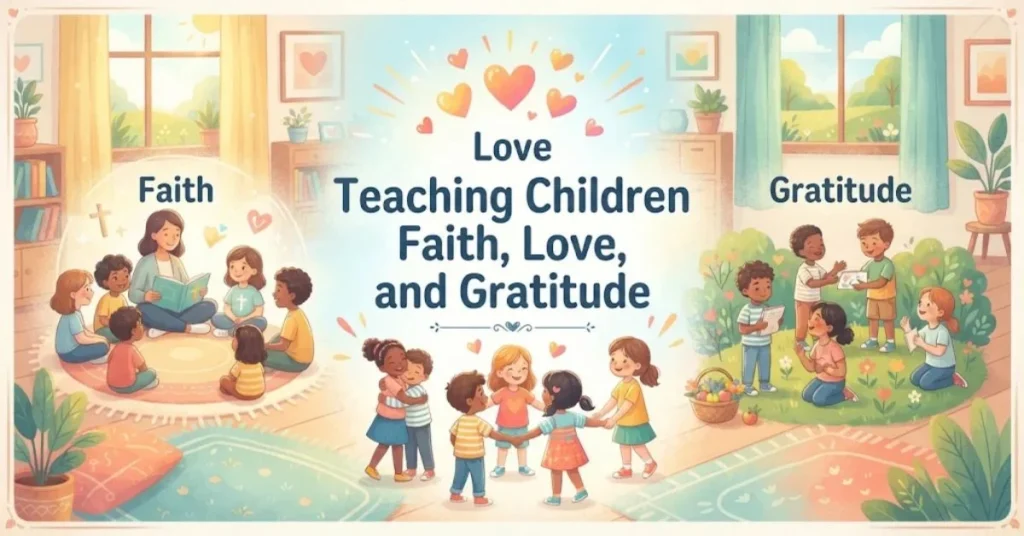
Parents can introduce children to faith through everyday examples, meaningful conversations, prayer, and acts of kindness. Teaching gratitude and love can help children develop values that influence how they treat themselves and others.
- Begin with simple conversations about kindness, compassion, honesty, and respect.
- Prayer can give children a familiar way to express gratitude, concerns, hopes, and appreciation.
- Reading age-appropriate Bible passages can introduce important spiritual lessons in an accessible way.
- Parents can demonstrate love by treating family members with patience and understanding.
- Gratitude becomes meaningful when children learn to notice both ordinary and significant blessings.
- Acts of service can show young people how faith can be expressed through practical kindness.
- Encouraging children to thank others helps them recognize the effort and care they receive.
- Family discussions can give children opportunities to ask questions and develop thoughtful perspectives.
- Compassion grows when children are encouraged to consider how their words and actions affect others.
- Consistent examples from parents can reinforce the values children are learning at home.
- Celebrating kindness can help young people understand that character matters more than material possessions.
- Forgiveness can be taught by showing children how to acknowledge mistakes and make sincere amends.
- Respect for others can become a daily habit through positive family communication and example.
- Spiritual lessons become more memorable when they are connected with real experiences and family activities.
- Over time, these practices can help children develop values that guide their relationships and decisions.
Ways to Celebrate Children as a Blessing From the Lord
Celebrating children does not always require special occasions or elaborate traditions. Spending meaningful time together, expressing appreciation, praying for their future, and recognizing their accomplishments can make children feel deeply cherished.
- Create family traditions that give children positive memories and a lasting sense of belonging.
- Mark important milestones with sincere words that recognize their effort and personal growth.
- Write encouraging notes that children can keep and read whenever they need reassurance.
- Set aside regular family time for conversation, prayer, laughter, and shared activities.
- Celebrate birthdays by expressing gratitude for the child’s life and the joy they bring to the family.
- Take photographs or create memory books that preserve meaningful moments from different stages of childhood.
- Pray together for wisdom, protection, kindness, and guidance throughout each new season.
- Encourage children to celebrate others by sharing kindness, generosity, and thoughtful words.
- Recognize their unique talents without comparing them with siblings, friends, or classmates.
- Plan simple family outings that allow everyone to enjoy quality time away from everyday responsibilities.
- Give children opportunities to participate in family traditions so they feel included and valued.
- Express gratitude openly when children demonstrate kindness, responsibility, courage, or perseverance.
- Remind them that their worth is not determined by achievements, grades, possessions, or popularity.
- Use meaningful moments to reinforce the idea that love, faith, and gratitude can shape family relationships.
- Cherish the journey of raising children by appreciating both the joyful moments and the lessons learned along the way.
FAQS
What does it mean that children are a blessing from the Lord?
The phrase means that children are viewed in the Bible as precious gifts entrusted to families by God. Their lives can bring love, joy, growth, responsibility, and meaningful opportunities for parents to nurture and guide them.
What Bible verse says children are a blessing from the Lord?
Psalm 127:3 is one of the best-known passages on this subject. It describes children as a heritage from the Lord and emphasizes their value within family life.
Why are children considered a gift from God?
Children are considered a gift because their lives bring unique relationships, experiences, and opportunities for love and growth. Biblical teaching also emphasizes the responsibility of caring for and guiding them.
How can parents appreciate children as blessings?
Parents can appreciate their children by spending quality time with them, listening to their thoughts, celebrating their growth, praying for them, and providing consistent love and guidance.
How can parents teach children about God’s blessings?
Parents can teach children through prayer, Bible reading, conversations about faith, gratitude, kindness, and everyday examples. These practices can help children understand spiritual values in ways that connect with daily life.
What is the spiritual responsibility of raising children?
Raising children involves providing care, guidance, discipline, encouragement, and spiritual instruction. Parents can help children develop values such as love, honesty, compassion, forgiveness, and gratitude.
How can families celebrate children as blessings from the Lord?
Families can celebrate children through meaningful traditions, prayer, shared activities, encouraging words, and special family moments. Showing appreciation throughout the year can help children feel loved, valued, and supported.
Conclusion
Children are a blessing from the Lord and can bring love, joy, purpose, and meaningful growth into family life. Scripture encourages families to recognize the value of children while embracing the responsibility of nurturing them with patience, faith, wisdom, and compassion. Every child has unique qualities and deserves to be loved, respected, and guided with care.
By creating a supportive home, teaching strong values, and expressing gratitude for each stage of childhood, parents can honor the precious gift of family and cherish the blessings children bring into their lives.
Related Articles You May Like: Looking for more inspiring wishes and messages? Check out these related articles to make every moment special: The Blessings Way